
If you eat plant-based diet, the question tends to appear sooner or later, where do you get your protein? It can sound harmless, but over time it often plants doubt. You may begin to second-guess your choices or feel pressure to justify how you eat.
What usually follows is a swirl of advice, some well-meaning, some alarming, much of it contradictory. It can make nourishment feel complicated when it doesn’t need to be.
A plant-based diet is capable of supporting the body deeply when it is approached with clarity rather than anxiety. With steady meals, thoughtful food choices, and an understanding of what your body actually needs, eating plant based can feel grounding, sustaining, and strong—without turning food into a constant calculation.
What Protein Does in the Body
Protein is not just about muscles or gym culture. It quietly supports almost every system in your body. It helps repair and maintain muscle, which becomes more important with movement, ageing, and recovery. It forms enzymes and hormones that regulate digestion, metabolism, mood, and energy. Protein supports immune function and helps the body recover from stress, illness, or injury. It also plays a major role in satiety, helping you feel satisfied after meals and keeping blood sugar more stable.
When protein intake is consistently low, people often feel tired, hungry soon after eating, or slow to recover. This can happen on any diet. It is not a failure of plant-based eating — it is simply a signal that the body needs more support.
How Much Protein Do You Actually Need
Protein needs are not one-size-fits-all. They vary based on age, activity level, body size, and overall health. Needs tend to increase slightly with age and with regular physical activity.
What matters more than hitting exact numbers is how protein shows up across your day. Including a meaningful protein source at each meal allows the body to use it more efficiently than consuming most of it in one sitting. Consistency matters more than precision. Your body responds better to regular nourishment than to chasing a perfect target.
Best Plant-Based Protein Sources
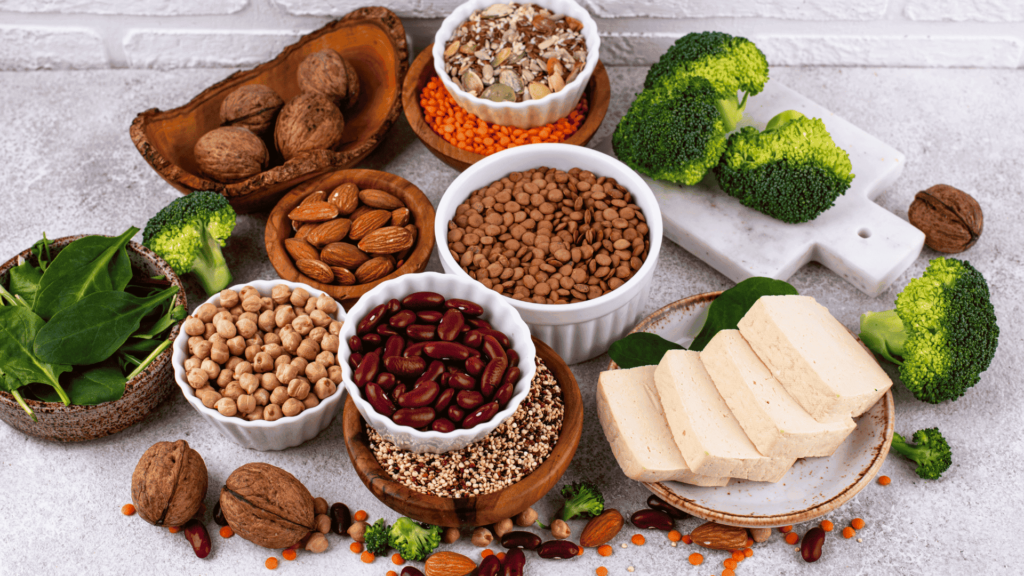
Plant-based protein does not come from one food; it comes from patterns of eating. When these foods are rotated and repeated through the day, most people meet their needs naturally.
- Lentils, chickpeas, and beans
These are dependable protein foundations that also provide fibre, iron, and minerals.
Recommended portion: about ¾ to 1 cup cooked per meal supports both protein intake and fullness. - Tofu, tempeh, and edamame
Soy-based foods are complete proteins and are well absorbed by the body. Tempeh is especially supportive for digestion due to fermentation.
Recommended portion: 100–150 g tofu or tempeh, or ½–1 cup edamame per meal. - Quinoa and millet
These grains provide more protein than refined grains and work well as meal bases when paired with vegetables and fats.
Recommended portion: ¾ to 1 cup cooked as part of a balanced plate. - Nuts and seeds
Almonds, peanuts, sunflower seeds, pumpkin seeds, flax seeds, and sesame add protein along with healthy fats that support hormone and brain health.
Recommended portion: 1–2 tablespoons seeds or a small handful of nuts per meal. - Plant-based yogurts and curd alternatives
When unsweetened and fortified, these contribute protein and support gut health, especially when combined with seeds or nuts.
Recommended portion: ¾ to 1 cup, ideally paired with seeds or fruit. - Whole grains
While not protein-rich on their own, whole grains still contribute to daily intake when meals are balanced overall.
Recommended portion: ½ to 1 cup cooked, ideally paired with legumes, vegetables, or healthy fats for better protein balance.
Using a mix of these foods throughout the day is enough for most people.
Building Balanced Plant-Based Meals
Think of your meals as support, not strategy. You don’t need complex rules. You just need balance. Start with a steady protein like lentils, beans, or tofu. Add vegetables or whole grains to bring fibre and fullness. Finish with a healthy fat—nuts, seeds, olive oil, avocado—to help you feel satisfied and nourished.
A morning meal might be a tofu scramble with vegetables and seeds. Lunch could be lentils with rice, vegetables, and a little ghee or olive oil. Dinner might be quinoa with beans, vegetables, and a simple tahini dressing. These meals are not about restriction—they are about steadiness.
When plant-based eating feels difficult, it’s rarely because protein is missing. More often, meals are too light or too refined. Living on bread, pasta, or plain rice leaves the body searching for more. Skipping meals or eating too little drains energy. Relying heavily on packaged vegan foods can crowd out real nourishment. These are not failures. They are signals. Learning to eat in a way that truly supports your body is a process—and every balanced meal is part of that learning.
Eating Plant-Based with Confidence
A plant-based diet does not need to be perfect. It needs to be nourishing, balanced, and sustainable. Meeting protein needs comes from regular meals, food variety, and paying attention to how your body responds. When protein intake is steady, energy improves, recovery feels easier, and meals become more satisfying.
For those who want structured guidance and practical education around balanced eating, the Weight Management Retreat at The Beach House offers support in understanding plant-based nutrition in a realistic, sustainable way that fits everyday life. Sometimes confidence doesn’t come from knowing more rules — it comes from learning how to nourish yourself with clarity and trust.
Disclaimer: Our content is not intended to provide medical advice or diagnosis of individual problems or circumstances, nor should it be implied that we are a substitute for professional medical advice. Users /readers are always advised to consult their Healthcare Professional prior to starting any new remedy, therapy or treatment. The Beach House – Goa accepts no liability in the event you, a user of our website and a reader of this article, suffers a loss in any way as a result of reliance upon or inappropriate application of the information hosted on our website.