
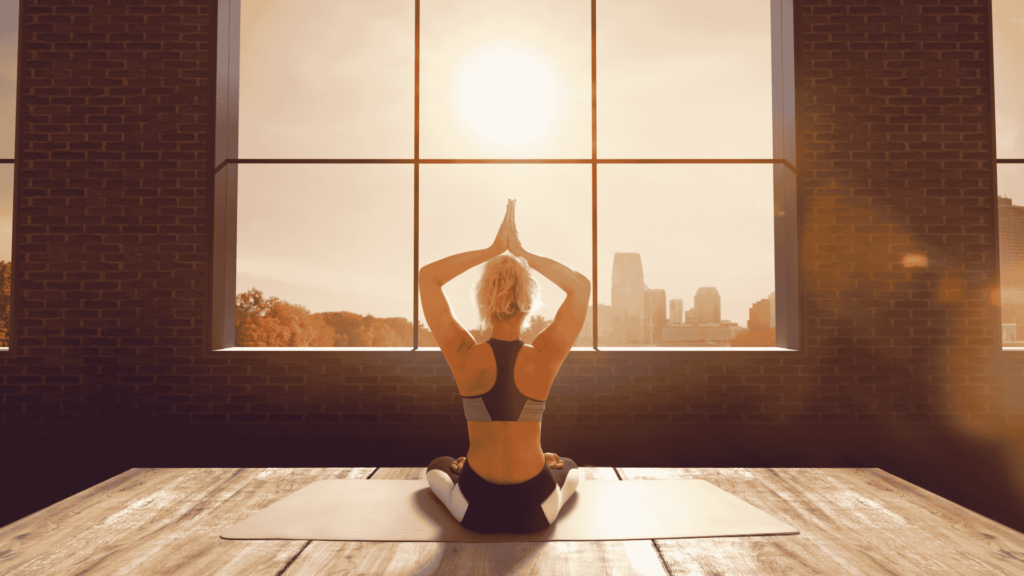
When most people think of core strength, they picture intensity like crunches, burn, and visible muscle. Strength becomes something you force, push through, and prove. But yoga offers a different approach. Yoga for core strength is less about gripping and tension, and more about awareness, breath, and alignment. Instead of “hardening” the body, yoga trains the core to support the spine with steadiness and control. Over time, this builds a kind of strength that feels sustainable that helps to improve posture, balance, and everyday movement without strain.
What the Core Really Is
The core isn’t just your “abs,” and it’s not one single muscle group. In yoga, the core is seen as a connected support system made up of the deep abdominal muscles, diaphragm, pelvic floor, and the stabilising muscles around the spine.
These parts work together to support posture, balance, breath, and movement. That’s why yoga for core strength focuses less on isolating muscles and more on building coordination, alignment, and control from the inside out.
True core strength comes from internal stability without rigidity. Over time, yoga builds a steady, responsive foundation that supports you not only on the mat, but in how you sit, stand, walk, and move through daily life.
Movement: Awakening The Core
In yoga, core strength often begins in motion. Gentle flowing sequences teach your core to respond naturally, instead of bracing or gripping. As you move from one posture to another, the body learns how to stay steady while still feeling free.
Balance postures help too. The moment you wobble, your core turns on automatically to keep you upright. Slow transitions make this even clearer as they show you how your core supports your spine not just in a pose, but in every small shift in between.
Yoga strengthens the core by teaching awareness first, effort comes later.
Breath: The Hidden Strength Activator
Most people don’t realise the breath is part of core strength. The diaphragm is a stabilising muscle, and when you breathe with awareness, your body creates internal support without strain.
Instead of holding your breath to “work harder,” yoga trains your core to work with your breath. That’s what builds control and endurance. And when the breath is calm, the nervous system softens which helps the deeper core muscles do their job without tension taking over.
In yoga, breath isn’t an add-on. It’s a core tool.
Alignment: Strength without struggle.
Good alignment changes everything. When the spine is supported correctly and joints are stacked with awareness, the core can engage without overworking. This reduces unnecessary strain on the lower back and neck while allowing strength to develop in a way that feels supportive rather than aggressive. Alignment transforms effort into efficiency, making core strength sustainable over time.
Stillness: Where Core Strength Deepens
Stillness is where yoga becomes surprisingly powerful. Holding a posture builds deep, steady strength without needing fast movement or high intensity. It also reveals habits you may not notice like leaning into one side, gripping through the jaw, holding the breath, or collapsing into the lower back.
As you stay present, the body learns a quiet kind of stability: steady, controlled, and sustainable.
This is strength you don’t have to force. In stillness, the core learns to support the body quietly, without visible effort. This is where strength becomes refined and deeply functional.
Core Strength and the Nervous System
Core strength is not only mechanical; it is neurological. Excessive tension disrupts coordination and weakens true stability, while calm focus improves muscle communication. Yoga integrates nervous system regulation with physical engagement, allowing the body to remain steady without rigidity. As stress reduces, the core responds with greater efficiency and resilience. This connection explains why yoga for core strength often improves posture, balance, and back health even without intense muscular effort.
Where Strength Gently Settles
In yoga, strength is not something to be forced or proven. It grows through listening—to the breath, to alignment, and to the quiet intelligence of the body. As movement softens into stillness, the core learns how to support without gripping, and stability begins to feel calm rather than strained. This kind of strength does not exhaust you. It holds you.
When strength is built with awareness, it becomes something you can rely on—in posture, in movement, and in daily life. Yoga reminds us that the most enduring strength allows ease, steadiness, and trust to exist together within the body. If you would like to explore this approach, the Yoga & Meditation Retreat at the Beach House Goa offers a supportive space to explore mindful movement, breath-led stability, and embodied strength, allowing the body to relearn how to move with intelligence and grace.
Disclaimer: Our content is not intended to provide medical advice or diagnosis of individual problems or circumstances, nor should it be implied that we are a substitute for professional medical advice. Users /readers are always advised to consult their Healthcare Professional prior to starting any new remedy, therapy or treatment. The Beach House – Goa accepts no liability in the event you, a user of our website and a reader of this article, suffers a loss in any way as a result of reliance upon or inappropriate application of the information hosted on our website.