
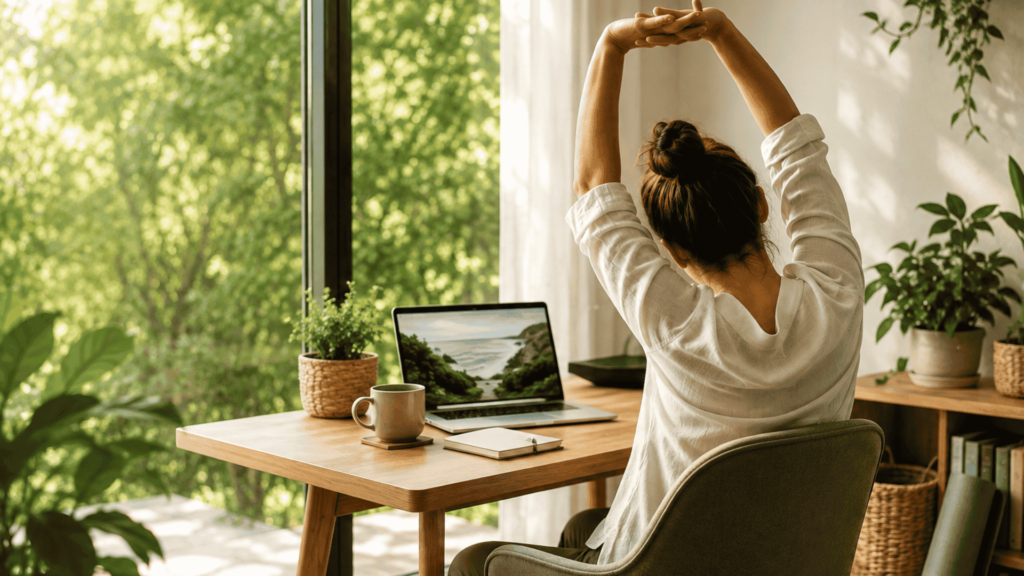
When You Start Feeling the Effects of Sitting All Day
You start the morning at your desk, planning to get up in a little while. Then one email becomes ten, meetings run into each other, and suddenly hours have passed. By evening, your shoulders may feel tight, your lower back heavy, and your body unusually tired. These are some of the everyday experiences that can make you wonder about the effects of sitting all day and what prolonged periods of inactivity may be doing to your wellbeing.
For many of us, sitting has become such a normal part of working life that we rarely think of it as a habit. We sit while working, travelling, eating, relaxing and watching television, which means that even people who exercise regularly may still spend much of the rest of their day in a chair.
Sitting itself is not the problem because your body needs periods of rest and recovery. The concern arises when long, uninterrupted periods of sitting leave too little room for regular movement throughout the day. Over time, this pattern can influence physical comfort, mobility and wider aspects of health, making it worth understanding the effects of sitting all day and, more importantly, the small changes that can help you move more often.
Your Body Was Made for More Than a Chair
The human body thrives on variety. Your joints, muscles, and posture all benefit from the everyday movements of walking, reaching, bending, stretching and turning.
A desk removes much of that variety.
When you remain seated for hours, your hips stay flexed, your shoulders may begin to round, and your head can gradually drift towards the screen. Some muscles remain relatively inactive, while other stay in the same position for long periods.
You may not notice it immediately. But when standing after a long meeting leaves you feeling unexpectedly stiff, it may simply be your body’s reminder that it needs more movement than your working day is providing.
What Happens to Your Muscles and Joints?
Your muscles and joints are often among the first places where you notice the effects of sitting all day. Remaining in one position for long periods can contribute to stiffness and muscular fatigue, particularly around the lower back, hips, neck and shoulders. Poor workstation positioning may add to this discomfort, especially if you regularly lean towards your screen or sit without adequate support.
The result may feel familiar: a stiff lower back when you stand, tight hips after a long meeting, or tension across your neck and shoulders at the end of the day.
However, sitting for eight hours does not automatically mean you are damaging your body. What matters is the wider pattern on how long you remain still, how often you change position, your activity outside work, and how well your workstation supports you.
This shifts the focus away from fearing sitting and towards something more useful: finding simple ways to bring more movement and variety into your day.
Sitting Affects More Than Your Back
Prolonged sitting isn’t only about posture. Movement supports your cardiovascular health, circulation, blood glucose, regulation and overall metabolic wellbeing.
Long periods of sedentary behaviour, particularly when combined with low levels of physical activity are associated with poorer health outcomes over time.
That doesn’t mean you need to fear your office chair. The aim is simply to avoid letting sitting become the default position for most of your day.
A short walk, a standing conversation, a stretch between meetings or regularly changing position can all help break up long periods of stillness.
Then There Is the Mental Fatigue
After several uninterrupted hours in front of a screen, you can feel exhausted even though your body has barely moved. Part of that fatigue may come from the constant demands on your attention as you move between emails, notifications, meetings, deadlines and decisions, often with few genuine pauses in between.
Physical tension can build alongside this mental fatigue. You may clench your jaw while concentrating, raise your shoulders during a stressful call, or gradually lean closer to your screen without noticing. These less obvious effects of sitting all day can leave you feeling physically uncomfortable as well as mentally drained.
By the time work finishes, your body may still be carrying some of that tension. This is where movement becomes more than exercise; it offers a simple way to pause, change your physical state and interrupt a pattern of prolonged stillness.
Why One Workout Doesn’t Cancel an Entire Day of Sitting
You might exercise in the morning and still spend most of the working day seated.
That workout matters. Regular exercise brings significant benefits for both physical and mental health. But exercise and sedentary time are not quite the same thing.
You can meet your exercise goals while still spending long, uninterrupted periods sitting. This is why it helps to think about both: making time for regular exercise while also breaking up periods of inactivity throughout the day.
So alongside asking, “Did I exercise today?”, try asking:
“How often did I move today?”
It is a small shift, but one that encourages movement to become part of your day rather than something confined to a workout.
Your Body Doesn’t Need a Perfect Posture
When desk discomfort appears, it’s tempting to respond by trying to sit perfectly upright all day. But holding any position rigidly for hours can create tension of its own.
There isn’t one perfect posture you need to maintain throughout the workday. Your body generally benefits more from changing positions regularly.
Sit comfortably. Adjust your position. Stand periodically. Stretch. Walk. Then sit again. The healthiest posture may often be your next posture.
Small Movement Breaks Matter More Than You Think
Reducing the effects of sitting all day doesn’t require turning your office into a gym.
Start with what feels realistic.
Stand while taking a phone call. Walk to speak with a colleague instead of sending another message. Refill your water bottle. Take the stairs when practical. Stretch your chest after a long meeting. Walk for a few minutes after lunch.
You can also create small cues throughout your day. When a meeting finishes, take the opportunity to stand and move around. A trip to refill your coffee or tea can also become a brief walking break. Most importantly, respond when your body starts feeling stiff rather than waiting until the discomfort becomes difficult to ignore.
These tiny interruptions may seem insignificant, but together they create something your body has been missing regular movement.
Where Yoga Can Help
Yoga offers something particularly valuable after a day spent sitting: an opportunity to notice how your body feels.
After hours focused on screens, tasks and other people’s demands, your attention turns inward. Is your neck stiff? Are your shoulders tense? Do your hips feel restricted? Has your breathing become shallow?
You don’t need an advanced yoga practice. Gentle Cat-Cow movements encourage spinal mobility, while a supported low lunge can help open the fronts of the hips. Mountain Pose brings awareness back to upright alignment, and gentle twists introduce movement through the torso.
Yoga also brings movement and breath together, making it a useful transition at the end of a demanding workday.
You aren’t simply stretching after sitting.
You are creating a moment to move, breathe and leave the working day behind.
Meditation Helps You Notice What Busyness Hides
Sitting at a desk and sitting in meditation may look similar but the experience can be very different.
During work, your attention is often pulled towards emails, meetings and deadlines. Meditation brings it back to your breath, your body and what you are experiencing in the moment. During meditation, you deliberately bring it back.
That awareness can carry into your working day. You may notice your shoulders tightening; realise you’ve been sitting for too long or catch yourself holding your breath during a stressful moment.
Mindfulness doesn’t remove the demands of your job. It simply helps you notice how your body is responding to them and gives you an opportunity to respond differently.
From Sedentary to More Intentional
You may not be able to change the fact that your work requires a desk. But you can change what happens around it.
Break up long periods of sitting. Step outside at lunchtime. Change position regularly. Make space for movement before, during and after the working day.
None of these changes needs to be dramatic. What matters is creating a working day in which movement isn’t confined to a workout or left until your body feels uncomfortable.
You don’t need to completely reinvent your routine.
You simply need to bring more movement back into it.
Rediscovering Movement
Sometimes you only realise how much tension you’ve been carrying when you finally have the space to slow down.
At The Beach House Goa, the Yoga & Meditation Retreat offers an opportunity to step away from routines that keep you seated, connected and mentally occupied. Through guided yoga, meditation and mindful breathing, you can reconnect with movement, body awareness and a quieter pace.
Away from the desk and constant notifications, movement can begin to feel less like another task and more like something your body genuinely enjoys.
The aim isn’t to avoid sitting altogether. It’s to return with greater awareness of when your body needs to move, and to respond when it does.
Disclaimer: Our content is not intended to provide medical advice or diagnosis of individual problems or circumstances, nor should it be implied that we are a substitute for professional medical advice. Users /readers are always advised to consult their Healthcare Professional prior to starting any new remedy, therapy or treatment. The Beach House – Goa accepts no liability in the event you, a user of our website and a reader of this article, suffers a loss in any way as a result of reliance upon or inappropriate application of the information hosted on our website.