
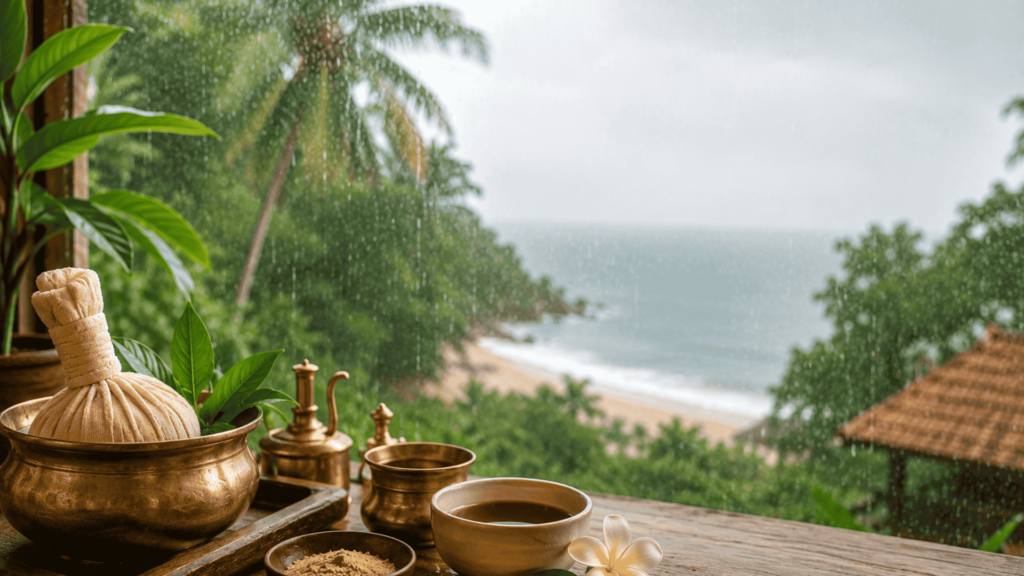
Why Monsoon Has Always Been Considered a Special Time for Healing
Have you ever noticed how your body feels different during the monsoon? You may feel heavier, more sluggish, less energetic, or simply not quite yourself. Digestion can feel slower. Motivation can dip. Even the mind may feel clouded and restless.
According to Ayurveda, this is not a coincidence. The rainy season creates subtle changes within the body, making it one of the most important times of year to focus on healing and restoration.
For centuries, Ayurveda has recognised these seasonal shifts and viewed the monsoon as a unique opportunity to help the body regain balance and vitality. This is where the benefits of Panchakarma during monsoon begin to stand out. While many people associate Panchakarma with cleansing and rejuvenation, fewer realise that Ayurveda traditionally considers the rainy season one of the most supportive times to experience this restorative process.
What Is Panchakarma?
Panchakarma is a traditional Ayurvedic cleansing therapy that helps remove toxins from the body and restore balance in the doshas/biological energy pattern — Vata, Pitta, and Kapha. It includes five main purification treatments that support digestion, immunity, energy, mental clarity, and overall wellness.
Rather than focusing on a single treatment, Panchakarma combines personalised therapies, nutrition, daily routines, and supportive practices that work together to promote overall wellbeing.
Many people undertake Panchakarma to:
- Support digestive health
- Encourage balance within the body
- Improve vitality and energy
- Calm the nervous system
- Create space for physical and mental restoration
The experience is often less about dramatic change and more about helping the body return to a healthier state of equilibrium.
Why Ayurveda Recommends Panchakarma During Monsoon
Ayurveda places great importance on the changing seasons and the way they influence the body. According to traditional wisdom, the monsoon creates conditions that make the body more receptive to restorative therapies. Increased humidity and cooler temperatures are believed to support the effectiveness of cleansing and balancing practices. This is one reason Panchakarma during monsoon has been recommended for generations.
The season naturally encourages slower rhythms, making it easier for people to rest, reflect, and participate fully in the healing process. Rather than working against nature, Panchakarma aligns with the qualities of the season itself.
Why the Body Becomes More Receptive During Monsoon
Ayurveda teaches that the heat of summer leaves the body depleted and the digestive fire weakened. When the monsoon arrives, increased humidity and changes in atmospheric pressure can further disturb internal balance.
At the same time, the body’s channels are believed to become more open and receptive. This makes the rainy season an ideal opportunity for Panchakarma, as the body may respond more effectively to cleansing, nourishment, and rejuvenation therapies than during other times of the year.
The Digestive System Often Needs Extra Support During This Season
Many people notice subtle changes in digestion during the rainy months. Appetite may fluctuate. Digestion can feel slower. Some individuals experience a sense of heaviness or reduced digestive comfort.
Ayurveda teaches that digestive balance deserves particular attention during the monsoon. When digestion feels sluggish, the body may benefit from supportive nourishment, mindful eating practices, and therapies that encourage balance.
This is why Panchakarma during monsoon often places significant emphasis on digestive wellbeing. The goal is not restriction but supporting the body’s natural ability to process nourishment comfortably and efficiently.
The Hidden Mental and Emotional Benefits
People often think about Panchakarma in physical terms. Yet many guests describe something deeper.
Alongside physical restoration, they frequently notice:
- Greater mental clarity
- Reduced feelings of overwhelm
- Improved emotional balance
- A calmer internal state
- A stronger sense of connection with themselves
The slower pace of Panchakarma creates opportunities to step away from constant demands and stimulation. As external noise reduces, many people begin noticing a sense of spaciousness that extends beyond the body and into the mind. For this reason, Panchakarma during monsoon is often experienced as both a physical and emotional reset.
Signs Your Body May Be Asking for a Seasonal Reset
The body often gives subtle signals when it needs more support, rest, or balance.
During the monsoon season, you may notice:
- Feeling heavier or more sluggish than usual
- Reduced energy and motivation
- Slower digestion or a loss of appetite
- Difficulty feeling fully rested, even after sleep
- Increased mental fog or lack of clarity
- Feeling emotionally overwhelmed or irritable more easily
- A sense that your body and mind need a pause
These experiences are not always signs that something is wrong. Often, they reflect the accumulated effects of stress, irregular routines, mental overload, and the natural seasonal changes taking place around us.
This is why Ayurveda encourages periods of intentional restoration throughout the year. Rather than waiting for exhaustion to force change, seasonal practices such as Panchakarma create an opportunity to slow down, reset, and support the body’s natural return to balance.
What People Often Notice After Panchakarma
Every experience is unique, yet many people report similar observations following Panchakarma.
They often describe:
- Feeling lighter and more energised
- Improved digestive comfort
- Clearer thinking
- Deeper sleep
- Reduced feelings of heaviness
- A stronger connection with their body’s needs
These shifts tend to emerge gradually rather than suddenly. The process encourages balance, and balance often reveals itself through subtle improvements that influence daily life in meaningful ways.
This is part of what makes Panchakarma during monsoon such a valued seasonal practice.
The Monsoon Invitation to Slow Down
Nature rarely rushes during the rainy season. Rain falls steadily. The landscape softens. Activity slows.
The monsoon quietly encourages many of the qualities that support wellbeing:
- Rest
- Reflection
- Nourishment
- Inward focus
- Recovery
Panchakarma works in harmony with this natural rhythm. Instead of pushing harder, the process invites you to pause and create space for restoration.
In many ways, the season itself becomes part of the experience.
Preparing for a Seasonal Reset
Approaching Panchakarma with the right mindset can make the experience even more meaningful.
Many people benefit from:
- Arriving with an open mind
- Embracing slower routines
- Allowing time for rest
- Trusting the process
- Viewing the experience as gradual rather than immediate
The purpose is not to force change.
Instead, it is to create conditions where balance can begin to return naturally.
Working With Nature Rather Than Against It
The monsoon reminds us that nature moves through cycles of renewal. Perhaps we do too. There are times for activity and times for rest. Seasons for growth and seasons for restoration.
Modern life often encourages constant momentum, yet wellbeing sometimes asks for something different. It asks us to pause, to reflect and to restore.
For generations, Panchakarma during monsoon has offered a way to support that process through the wisdom of Ayurveda and the healing rhythm of the season.
At The Beach House Goa, the Panchakarma Retreat allows guests to experience this traditional Ayurvedic approach in a peaceful coastal setting. Through personalised therapies, Ayurvedic nutrition, mindful routines, and expert guidance, many discover the value of slowing down and working with nature rather than against it. Not as a quick fix. But as a seasonal opportunity to restore balance, calm the mind, and reconnect with a deeper sense of wellbeing.
Disclaimer: Our content is not intended to provide medical advice or diagnosis of individual problems or circumstances, nor should it be implied that we are a substitute for professional medical advice. Users /readers are always advised to consult their Healthcare Professional prior to starting any new remedy, therapy or treatment. The Beach House – Goa accepts no liability in the event you, a user of our website and a reader of this article, suffers a loss in any way as a result of reliance upon or inappropriate application of the information hosted on our website.