
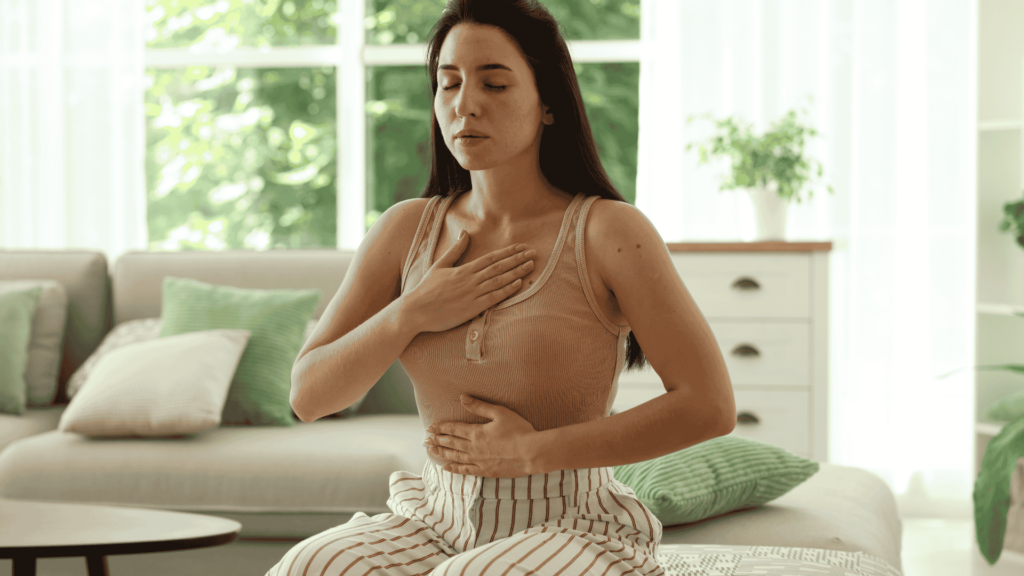
Sometimes panic doesn’t look dramatic from the outside. You may still be going to work, answering messages, or taking care of others while inside your body feels unsettled, shaky, or on edge. Many people quietly wonder if this means something is wrong with them. It does not. Learning about managing panic begins with understanding that panic is not a personal failure but a nervous system that has learned to react too strongly to stress. When the body is given the right signals of safety, it can slowly relearn how to settle again.
What Panic Really Is
Panic is not weakness and it is not a mental failure. It is a biological reaction. Your brain has mistakenly decided that you are in danger and has switched on the fight or flight response. When this happens, your body releases adrenaline, your breathing speeds up, your heart beats faster, and your muscles tighten. All of this is designed to help you survive a threat.
The problem is that sometimes the brain activates this alarm even when there is no real danger. The body reacts as if something terrible is happening, even when you are safe. Understanding this is a powerful step in managing panic without medication because fear loses some of its power when you know what is happening inside you.
Why Panic Feels So Terrifying
Panic attacks can feel like you are about to faint or lose control. These fears come from how intense the sensations are, not from actual danger. The symptoms always peak and pass, even if they feel unbearable in the moment. Your body cannot stay in panic forever. It is designed to return to balance once the alarm has run its course.
Knowing this helps break the fear panic cycle that keeps attacks repeating.
Why Medication Is Not the Only Answer
Medication can be helpful for some people and there is no shame in using it. But panic is a nervous system response, and the nervous system can learn new patterns. That means many people succeed at managing panic without medication by gently teaching their body that it is safe again.
The goal is not to suppress panic but to retrain your system so it no longer feels the need to sound the alarm so often.
Calm Is Something You Can Practice
These are some science informed ways to soothe panic without forcing or fighting it
Breath regulation
Slow breathing sends a powerful message to your brain that danger has passed. Try breathing in for four seconds and out for six seconds. Longer exhales calm the vagus nerve and reduce adrenaline.
Cognitive grounding
When panic rises, quietly say to yourself
“This is panic”
“It will pass”
“I am safe”
These simple words interrupt the fear spiral.
Body based grounding
Touching something solid, holding a cold glass, placing your feet firmly on the floor, or walking slowly brings awareness back into your body and out of racing thoughts.
Nervous system regulation
Gentle yoga, stretching, meditation, humming, and slow movement calm the stress response and retrain the nervous system over time.
Understanding triggers
Lack of sleep, caffeine, emotional stress, and unresolved feelings can make panic more likely. Awareness gives you power and reduces fear.
What To Do During a Panic Attack
When panic rises, the goal is not to fight it. Let it move through you.
- Slow your breathing
- Name what is happening
- Ground your body
- Let the wave rise and fall
- Do not resist
Panic fades faster when you stop struggling against it.
Remembering How to Rest
Your body is not working against you. Even in moments of panic, it is trying to keep you safe in the only way it knows how. When you meet those sensations with understanding instead of fear, something begins to soften. Calm is not something you have to force. It is something your nervous system slowly remembers when it feels supported, seen, and allowed to rest.
If you feel ready to be held in a calmer rhythm, the Yoga and Meditation Retreat at The Beach House Goa offers a space of stillness and care, where breath, gentle movement, and mindful rest invite the body to soften. In the right environment, the nervous system remembers how to slow down, and peace begins to feel possible again
Disclaimer: Our content is not intended to provide medical advice or diagnosis of individual problems or circumstances, nor should it be implied that we are a substitute for professional medical advice. Users /readers are always advised to consult their Healthcare Professional prior to starting any new remedy, therapy or treatment. The Beach House – Goa accepts no liability in the event you, a user of our website and a reader of this article, suffers a loss in any way as a result of reliance upon or inappropriate application of the information hosted on our website.