
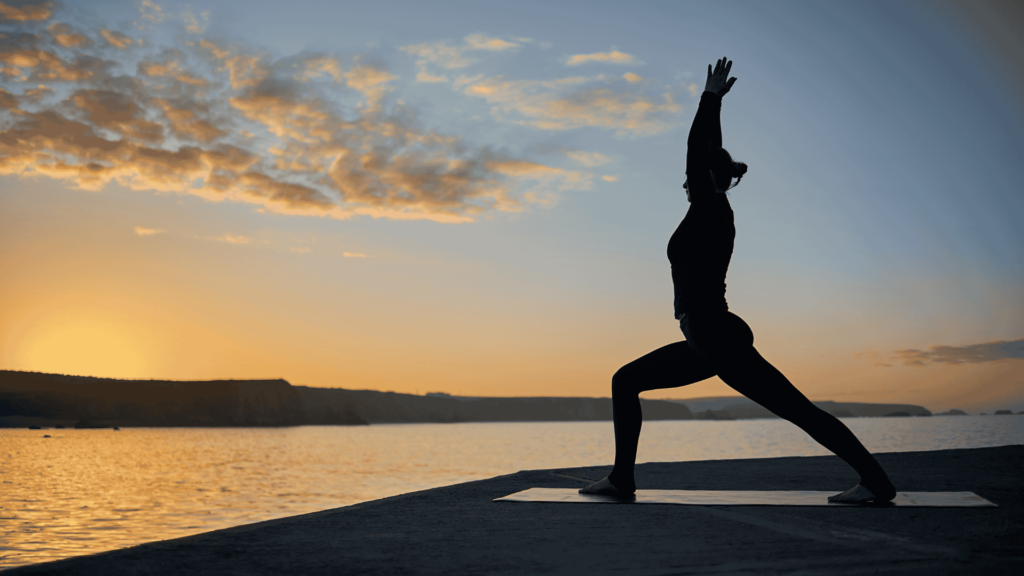
The mind – muscle connection for sleep is one of the most overlooked pathways to deep, natural rest.
Many of us try to quiet the mind at night while the body is still holding the day, tight shoulders, clenched hips, shallow breath. When muscles remain tense, the nervous system stays alert, and the brain receives a subtle message: it is not yet safe to sleep.
Slow, intentional stretching gently reverses this signal. By releasing physical tension, you invite the mind to soften as well. Sleep, then, becomes less about effort and more about permission.
Why Muscles Hold the Key to Mental Rest
Throughout the day, your muscles absorb stress long before your mind names it. Hours of sitting, rushing, bracing, and reacting leave the body contracted. Even when you lie down, these held patterns keep the brain active.
The mind-muscle connection for sleep works through the nervous system. When muscles lengthen slowly and consciously, sensory receptors send calming signals to the brain. Heart rate slows. Cortisol drops. The brain begins shifting out of problem solving mode and into rest.
This is why slow stretching before bed is so different from exercise. It is not about burning energy. It is about telling the brain that the day is complete.
How Slow Stretching Prepares the Brain for Sleep
Slow stretching prepares the brain for sleep by creating a cascade of safety signals through the body. These signals travel upward, calming mental activity without force.
A few gentle examples include:
• Long held forward folds that relax the spine and quiet mental chatter
• Hip opening stretches that release stored emotional tension
• Neck and shoulder movements that soften stress held from the day
• Supine stretches paired with slow breathing to activate relaxation pathways
Each movement works not by intensity, but by duration and awareness, the very qualities the brain needs to transition into sleep.
The mind-muscle connection for sleep becomes most powerful when stretching is paired with breath. Slow exhalations lengthen the body’s relaxation response, helping the nervous system shift into parasympathetic mode, the state where healing and sleep naturally occur.
Over time, the brain begins to associate these movements with rest. The body remembers the sequence. Sleep arrives sooner, feels deeper, and lasts longer.
This is not a technique to force sleep. It is a ritual that invites it.
A Soft Takeaway
When practiced consistently, slow stretching becomes a bridge between waking and rest. It teaches the body how to end the day, not abruptly, but gracefully.
The beauty of the mind-muscle connection for sleep lies in its simplicity. No supplements. No screens. Just movement, breath, and attention. A reminder that rest is not something to earn, but something to allow.
An Invitation to The Beach House Goa
If your nights feel restless and your body struggles to fully let go, the Unleash Retreat at The Beach House Goa offers a deeply supportive environment to experience this connection firsthand.
Through slow, restorative movement, breath led stretching, nervous system regulation, and guided relaxation practices, the Unleash Retreat helps you reconnect with the mind-muscle connection for sleep in a way that feels safe, natural, and embodied.
Here, sleep is not chased. It is welcomed. By the ocean, in rhythm with nature, your body relearns how to soften, and your mind follows. Because when the body rests, the mind remembers how to follow.
Disclaimer: Our content is not intended to provide medical advice or diagnosis of individual problems or circumstances, nor should it be implied that we are a substitute for professional medical advice. Users /readers are always advised to consult their Healthcare Professional prior to starting any new remedy, therapy or treatment. The Beach House – Goa accepts no liability in the event you, a user of our website and a reader of this article, suffers a loss in any way as a result of reliance upon or inappropriate application of the information hosted on our website.