
When Every Movement Feels a Little Harder
Have you noticed that getting out of bed feels a little stiffer than it used to? Perhaps your knees ache on the stairs or your lower back tightens after sitting. If these changes feel familiar, you may be exploring Ayurvedic treatments for joint health as a holistic way to support comfortable movement.
Joint discomfort often develops gradually. It can affect the way you move, exercise, travel, and enjoy everyday life. Although these changes are commonly linked with ageing, they can also be influenced by lifestyle, posture, repetitive movement, previous injuries, and stress.
Ayurveda takes a holistic approach by looking beyond the joints themselves. It considers digestion, nourishment, movement, daily routines, and overall balance. Alongside appropriate medical care, traditional therapies may help support mobility, flexibility, and long-term wellbeing.
How Ayurveda Understands Joint Health and Discomfort
Joint discomfort can develop for many reasons. Age-related changes, prolonged sitting, repetitive movement, previous injuries, poor posture, excess body weight, and stress may all play a role. Medical conditions can also affect how comfortably your joints move. Over time, the muscles surrounding the joints may become tight or weak, flexibility may decrease, and everyday movement can begin to feel more restricted.
Ayurveda looks at joint health from a broader perspective. Ayurveda connects comfortable movement with several aspects of wellbeing. These include balanced doshas (Vata, Pitta, and Kapha), well-nourished tissues (Dhatus), healthy digestive strength (Agni), and the processing of metabolic waste (Ama).
In Ayurveda, Vata dosha plays an important role in movement. When Vata becomes aggravated, qualities such as dryness, stiffness, and reduced mobility may become more noticeable. Ayurveda also places importance on digestion. Traditional Ayurvedic teachings associate impaired Agni with the accumulation of Ama, which may disturb the body’s natural balance.
Rather than focusing on one symptom or intervention alone, Ayurveda takes a more comprehensive approach to joint wellbeing. Movement, balanced nutrition, healthy daily routines, stress management, and appropriate Ayurvedic therapies may all form part of a personalised approach designed to support comfortable movement and overall wellbeing.
Ayurvedic Treatments for Joint Health
Ayurveda uses a range of traditional therapies to support joint comfort, mobility, and overall wellbeing. The most appropriate approach will depend on the individual, the area of discomfort, and their wider health needs.
1. Abhyangam – Warm Herbal Oil Massage
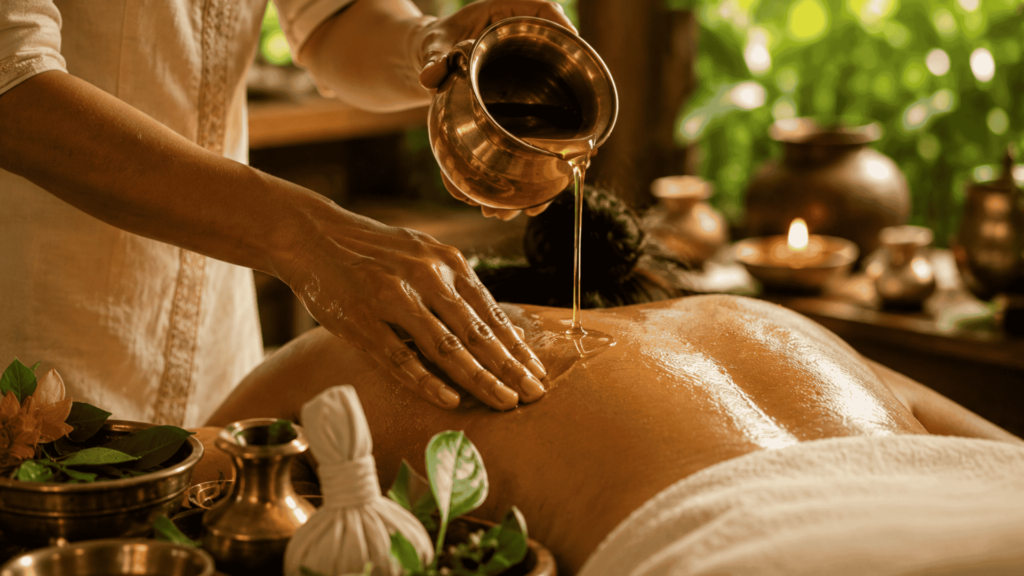
Abhyangam is one of Ayurveda’s most recognised therapies. During Abhyangam, the therapist uses warm medicated herbal oils chosen according to your constitution (Prakriti) and current imbalance (Vikriti).
The warmth of the oil, combined with rhythmic massage, helps nourish the skin and soft tissues while encouraging the body to relax. According to Ayurveda, Abhyangam is particularly valued for helping to calm aggravated Vata dosha and supporting comfort where dryness and stiffness are present.
Abhyangam may help to:
- Relax tight muscles.
- Support healthy circulation.
- Encourage flexibility and comfortable movement.
- Ease feelings of stiffness.
- Promote physical and mental relaxation.
Beyond joint comfort, Abhyangam is traditionally valued as a practice for supporting overall balance and wellbeing.
2. Patra Pinda Sweda – Herbal Leaf Poultice Therapy
Patra Pinda Sweda combines warm herbal oils with medicinal leaves bundled into poultices. The therapist gently applies the warm poultices to the body, often after Abhyangam.
The warm herbal poultices are rhythmically pressed over specific areas. The combination of warmth, herbal ingredients, and massage creates a soothing treatment designed to relax the body and support comfortable movement.
Traditionally, Patra Pinda Sweda is used to:
- Ease muscular tightness.
- Encourage joint mobility.
- Promote comfort in areas of stiffness.
- Support circulation to the muscles and joints.
Its warming nature makes Patra Pinda Sweda a complementary therapy within broader Ayurvedic programmes for joint health and mobility.
3. Janu Basti – Localised Knee Nourishment
For people experiencing stiffness or discomfort around the knees, Janu Basti provides a more localised Ayurvedic approach.
During Janu Basti, the therapist places a herbal dough ring around the knee and fills it with warm medicated oil. The oil remains in place for a set period, keeping gentle warmth around the area. Afterwards, the therapist may massage the surrounding tissues.
According to Ayurveda, Janu Basti may help to:
- Provide localised nourishment around the knee.
- Support flexibility and mobility.
- Ease feelings of stiffness.
- Encourage greater comfort during movement.
Because it focuses on a specific area, Janu Basti is often incorporated into broader Ayurvedic programmes designed to support joint wellbeing.
4. Kati Basti – Supporting the Lower Back
The lower back plays an important role in everyday movement, from walking and bending to lifting and sitting. Kati Basti is an Ayurvedic therapy that focuses specifically on this region.
Similar to Janu Basti, the therapist places a herbal dough ring over the lower back and fills it with warm medicated oil. The warmth encourages the surrounding muscles and tissues to relax before gentle massage.
Traditionally, Kati Basti may help to:
- Relax muscles surrounding the lower back.
- Support mobility and flexibility.
- Encourage greater comfort during movement.
- Complement appropriate rehabilitation or therapeutic programmes.
The deeply warming and soothing nature of Kati Basti can be particularly appealing when prolonged sitting or physical activity has contributed to muscular tightness.
5. Pizhichil (Sarvangadhara) – Warm Oil Rejuvenation Therapy
Pizhichil, also known as Sarvangadhara, is a traditional Ayurvedic rejuvenation therapy that works with the body as a whole rather than focusing on one particular joint.
During Pizhichil, trained therapists pour a continuous stream of warm medicated herbal oil over the body while performing synchronised massage. The combination of warmth, flowing oil, and rhythmic movement creates a deeply relaxing experience.
Traditionally, Pizhichil may help to:
- Promote deep physical relaxation.
- Support flexibility and comfortable movement.
- Ease muscular tension.
- Encourage overall rejuvenation and wellbeing.
Within Ayurveda, Pizhichil is valued for supporting both physical comfort and a wider sense of balance and relaxation.
6. Yoga and Lifestyle – Supporting Joint Health Every Day
Ayurvedic care does not end when a therapy session finishes. Long-term joint health is also influenced by how we move, rest, eat, and care for the body each day.
Gentle yoga can support flexibility, muscle strength, posture, and balanced movement while helping you become more aware of your body’s natural range of motion. Breathwork can encourage relaxation, while mindful movement and balanced nutrition can complement therapeutic care.
Everyday habits that can support joint health include:
- Gentle daily stretching.
- Regular walking and movement.
- Maintaining a healthy body weight.
- Getting adequate sleep and recovery.
- Managing stress.
- Following consistent daily routines.
When combined with appropriate Ayurvedic treatments for joint health, these daily practices create a more balanced approach to long-term wellbeing. Rather than relying on treatment alone, the emphasis is on creating habits that help the body remain active, mobile, and well supported over time.
Caring for Your Joints Is a Lifelong Practice
Consistent care helps support healthy joints over time. Ayurveda looks beyond temporary comfort. It combines personalised therapies with movement, nourishing food, healthy digestion, good posture, stress management, and mindful self-care.
When these elements work together, they create a more sustainable approach to maintaining mobility and overall wellbeing throughout life.
Rather than viewing Ayurveda as something to turn to only when discomfort appears, it can become a way of living that helps support comfortable movement for years to come.
Healthy Joints for Your Independence
Healthy joints allow you to move confidently through life. Walk beside the people you love. Travel with greater comfort. Step onto your yoga mat with ease.
Keep bending, stretching, and enjoying the everyday moments that bring meaning to your life.
At The Beach House Goa, our Ayurveda Indian Detox Retreat offers personalised Ayurvedic consultations and traditional therapies tailored to each guest’s individual constitution and wellness goals. An Ayurvedic consultation helps us personalise each programme to the individual. Depending on your needs, the programme may include Ayurvedic treatments for joint health such as Abhyangam, Patra Pinda Sweda, Janu Basti, Kati Basti, and Pizhichil. Therapeutic yoga, Ayurvedic cuisine, and lifestyle guidance may also form part of your experience.
Rather than focusing on temporary relief, the retreat encourages a holistic approach inspired by Ayurveda by helping you care for your body through consistent daily practices that support long-term health.
Because lasting joint health is not only about easing discomfort. It is about supporting your body’s natural ability to move with strength, balance, confidence, and ease for years to come.
Disclaimer: Our content is not intended to provide medical advice or diagnosis of individual problems or circumstances, nor should it be implied that we are a substitute for professional medical advice. Users /readers are always advised to consult their Healthcare Professional prior to starting any new remedy, therapy or treatment. The Beach House – Goa accepts no liability in the event you, a user of our website and a reader of this article, suffers a loss in any way as a result of reliance upon or inappropriate application of the information hosted on our website.