
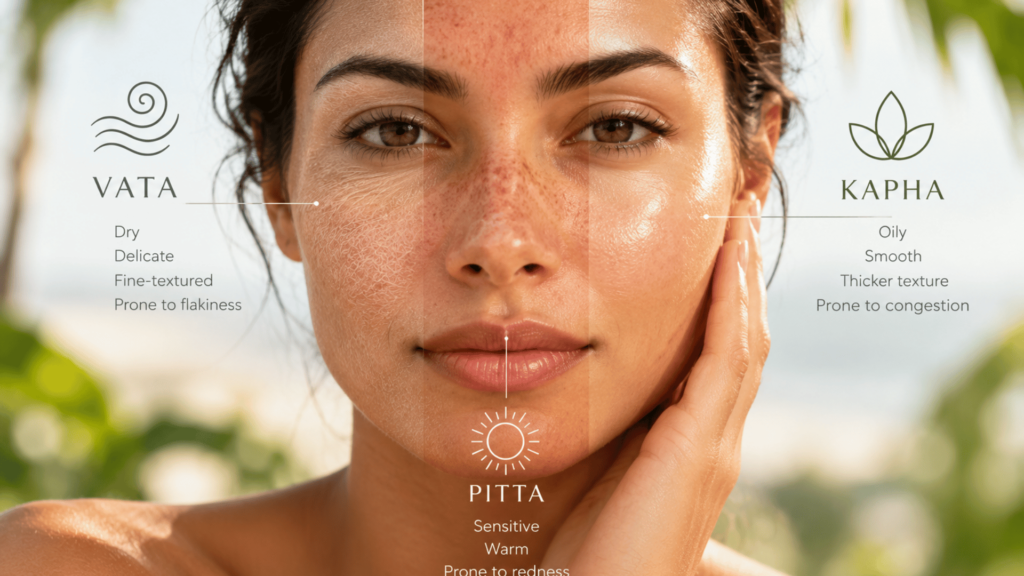
Have you ever wondered why your skin feels dry even after moisturising, while someone else’s becomes oily by midday? Perhaps your skin reacts quickly to heat, develops occasional redness or feels different as the seasons change. Skincare products can help, but understanding Ayurvedic skin types may offer another way to care for your skin.
Ayurveda traditionally explores these differences through three doshas: Vata, Pitta and Kapha. Each dosha represents a particular combination of characteristics that Ayurveda uses to describe individual tendencies and patterns of balance.
Ayurveda encourages a personalised approach rather than treating every skin concern in the same way. It considers your skin’s qualities alongside your lifestyle, environment and overall wellbeing.
What Does Ayurveda Say About Your Skin Type?
Ayurveda is a traditional system of health and wellbeing that originated in India thousands of years ago. A central Ayurvedic belief is that every person has a unique constitution, known as Prakriti. Ayurveda describes this through three doshas: Vata, Pitta and Kapha.
Vata represents movement, dryness and lightness; Pitta reflects heat and transformation; and Kapha embodies stability, moisture and structure. According to Ayurvedic philosophy, these qualities influence individual characteristics, including those associated with the skin.
Most people have a combination of these qualities rather than fitting neatly into one of the three Ayurvedic skin types.
Modern dermatology does not recognise dosha-based skin classification as a scientifically validated diagnostic system. However, Ayurveda offers a traditional way to understand your skin’s characteristics and approach personal care more mindfully.
Vata Skin: When Dryness and Delicacy Need Extra Care
In Ayurveda, Vata represents the elements of air and space. Its qualities include dryness, lightness, coolness and movement.
Among the three Ayurvedic skin types, Vata-dominant skin traditionally shows fine texture, delicacy and a tendency towards dryness. Cold weather or air-conditioned environments may leave the skin feeling tight. You might also notice flakiness, rough patches or fine lines.
How to Care for Vata-Type Skin
Ayurvedic approaches generally emphasise moisture, warmth and consistency. A gentle cleanser and nourishing moisturiser can help maintain comfort. Ingredients such as glycerin, ceramides and hyaluronic acid also support skin hydration.
Traditional Ayurvedic routines may also include gentle oil massage. However, oils do not suit everyone, so choosing an appropriate product and testing it on a small area first is important.
Regular sleep, balanced nutrition and a consistent daily routine can complement these skincare practices.
Remember that dryness can also result from climate, ageing, skincare products or medical conditions and does not necessarily indicate a Vata constitution.
Pitta Skin: Understanding Sensitivity, Heat and Redness
Ayurveda traditionally connects Pitta with fire and water, reflecting warmth, transformation and intensity.
Traditional Ayurvedic descriptions characterise Pitta-dominant skin as sensitive, warm or prone to visible redness. Some people may notice that their skin reacts more readily to strong sunlight, heat or certain skincare products.
Traditional descriptions also associate Pitta characteristics with occasional blemishes and uneven pigmentation.
How to Care for Pitta-Type Skin
Ayurveda traditionally favours a gentle, cooling approach. In everyday skincare, this means avoiding harsh exfoliation, irritating ingredients and excessive heat exposure.
A fragrance-free cleanser, lightweight moisturiser and daily broad-spectrum sunscreen can help protect sensitive skin. Introducing new products gradually also makes it easier to identify ingredients that cause discomfort.
Relaxation practices may support stress management and overall wellbeing, although persistent redness or irritation should not automatically be attributed to a dosha imbalance. Conditions such as rosacea, dermatitis and allergies may require professional assessment.
For Pitta-type skin, the emphasis is on comfort, protection and avoiding unnecessary irritation.
Kapha Skin: Caring for Oiliness and Congestion
Ayurveda connects Kapha with earth and water, reflecting stability, softness, moisture and structure.
Among the traditional Ayurvedic skin types, Kapha-dominant skin often appears smooth, supple and naturally well moisturised. It may also show greater oiliness, enlarged-looking pores or a tendency towards congestion.
How to Care for Kapha-Type Skin
Ayurvedic approaches generally encourage lightness and regular cleansing. A gentle cleanser can help remove excess oil, while a lightweight, non-comedogenic moisturiser provides hydration without feeling heavy.
For skin prone to clogged pores or breakouts, suitable products containing salicylic acid may be helpful, depending on individual tolerance.
Avoid excessive washing or aggressive scrubbing, as these can irritate the skin and interfere with its protective barrier.
Genetics, hormones, age and environmental conditions also influence oiliness. Therefore, oily skin alone cannot confirm a particular Ayurvedic constitution.
Can You Have More Than One Ayurvedic Skin Type?
Not everyone recognises themselves in just one of the traditional Ayurvedic skin types. You may have dry cheeks but an oily forehead, or notice that your skin becomes more sensitive during summer and drier during cooler months.
Ayurveda traditionally recognises combinations of doshas, such as Vata-Pitta or Pitta-Kapha, and considers seasonal changes an important influence on balance.
For example, dry and cold conditions are associated with Vata qualities, while hot weather is linked with Pitta.
From a practical skincare perspective, this may mean choosing a richer moisturiser during dry weather or switching to a lighter formulation when humidity increases.
Your skin’s needs can also change with ageing, hormonal fluctuations, stress, sleep patterns and the products you use. Balanced nutrition, adequate rest and gentle skincare habits can support general skin health.
Rather than following rigid rules, the aim is to observe how your skin responds and adjust your routine accordingly.
How Seasons and Everyday Habits Influence Your Skin
Your skin’s needs can change with the seasons. Dry weather and prolonged air-conditioning may contribute to tightness or flakiness, while hot, humid conditions can make the skin feel oilier.
Ayurveda traditionally considers seasonal changes an influence on dosha balance, associating dry and cold conditions with Vata qualities and warmer weather with Pitta. These principles encourage adapting your skincare routine to your environment, whether that means using a richer moisturiser during dry weather or a lighter formulation when humidity increases. Rather than following rigid seasonal rules, the emphasis should be on recognising how your skin responds and adjusting your care accordingly.
Simple Ayurvedic-Inspired Skincare Rituals for Everyday Life
You do not need an elaborate routine to begin caring for your skin more mindfully.
A few gentle practices can help you create consistency while respecting your skin’s individual needs.
- Begin with gentle cleansing. Choose a cleanser suited to your skin and avoid washing with excessively hot water.
- Moisturise according to your skin’s needs. Dry skin may benefit from richer creams, while oily skin may feel more comfortable with lightweight formulations.
- Protect your skin from the sun. Use broad-spectrum sunscreen with SPF 30 or higher, along with shade and protective clothing when appropriate.
- Be cautious with herbal applications. Natural ingredients can still cause irritation or allergic reactions. Avoid applying concentrated essential oils directly to the skin.
- Make time for rest. Consistent sleep and manageable daily routines support general wellbeing.
- Notice seasonal changes. Adjust your skincare when temperature, humidity or environmental exposure affects your skin.
These practices offer a simple foundation without requiring you to purchase numerous products or follow complicated rituals.
When Should You Seek Professional Skin Advice?
Ayurvedic principles may offer a traditional perspective on personal care, but they cannot diagnose or treat every skin concern.
Persistent acne, severe dryness, recurring rashes, unexplained pigmentation changes or ongoing redness may require a dermatologist’s assessment.
You should also seek medical advice for painful lesions, suspicious changes in moles, non-healing wounds or symptoms that continue despite appropriate skincare.
Some skin conditions need prescription treatment or further investigation.
If you are interested in Ayurvedic therapies, discuss any herbal products or treatments with qualified practitioners, especially if you have sensitive skin, allergies, an existing medical condition or take medication.
A personalised approach should always consider safety as well as tradition.
Your Skin Needs Understanding, Not Perfection
Understanding Ayurvedic skin types is not about achieving perfection or following a particular routine. It is about recognising its changing needs and choosing practices that support your overall wellbeing.
Discover Personalised Ayurvedic Wellness at The Beach House Goa
Beyond understanding Ayurvedic skin types, Ayurveda encourages us to look at the relationship between our daily routines, physical wellbeing and emotional balance.
At The Beach House Goa, our Ayurveda Indian Detox Retreat offers an opportunity to explore these traditional principles in a peaceful coastal setting.
Through consultations with Ayurvedic practitioners, personalised nutritional guidance, Ayurvedic therapies, yoga and meditation, the programme encourages a more thoughtful approach to everyday wellbeing.
You can explore how Ayurvedic principles relate to your individual constitution while discovering self-care practices that may be incorporated into your daily life.
The retreat focuses on traditional Ayurvedic wellness rather than dermatological diagnosis or treatment, offering a complementary experience for those interested in a more personalised approach to wellbeing.
Disclaimer: Our content is not intended to provide medical advice or diagnosis of individual problems or circumstances, nor should it be implied that we are a substitute for professional medical advice. Users /readers are always advised to consult their Healthcare Professional prior to starting any new remedy, therapy or treatment. The Beach House – Goa accepts no liability in the event you, a user of our website and a reader of this article, suffers a loss in any way as a result of reliance upon or inappropriate application of the information hosted on our website.