
When Your Body Has Forgotten How to Slow Down
You may finally have a quiet moment, yet your body still feels tense. There is nothing you urgently need to answer and nowhere you immediately need to be, yet your body hasn’t received the message. This is often when people begin exploring Ayurvedic massage for stress as a gentler way to slow down.
Your shoulders remain lifted. Your jaw is tight. Your breathing feels shallow. Your mind has already moved on to the next conversation, responsibility or unfinished task.
This is one of the strange things about prolonged stress. Removing the demand doesn’t always immediately remove the feeling of being under demand.
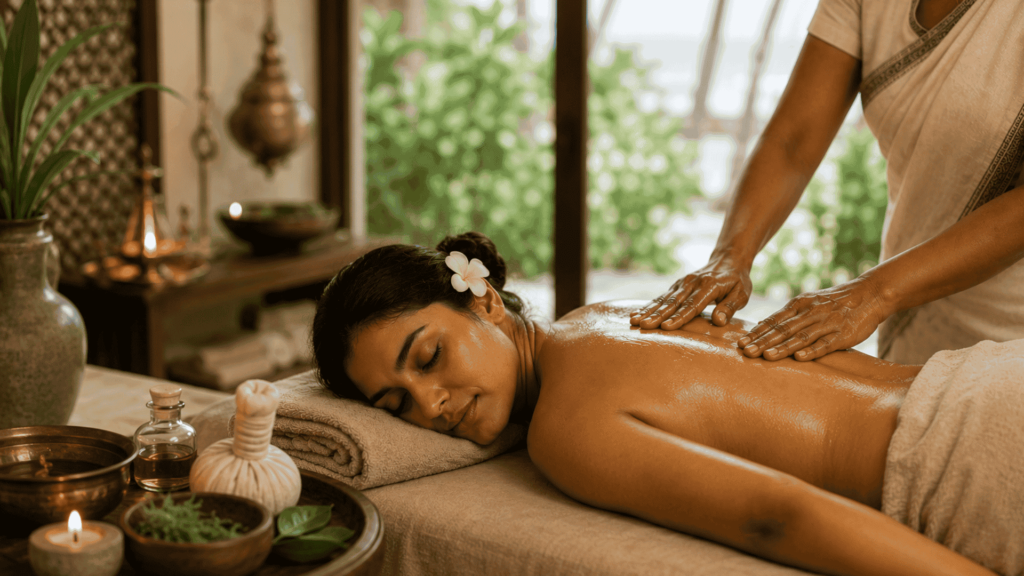
Traditional Ayurvedic massage offers a different way of approaching this experience. Through warm herbal oils, rhythmic touch and an intentionally unhurried environment, therapies such as Abhyangam create conditions that encourage the body and mind to slow down together.
Ayurvedic massage for stress does not remove the causes of stress or replace appropriate professional care. However, as part of a wider wellness approach, it can offer something many of us rarely receive: permission to stop doing and simply rest.
Why Stress Can Stay in the Body
Stress is not only something you experience through your thoughts. Your body responds too.
During demanding periods, you may notice shallow breathing, muscular tension, restlessness, disrupted sleep, headaches, or difficulty sitting quietly. Your mind may understand that the stressful moment has passed, while your body still seems prepared for the next demand.
Modern routines can make recovery even harder. Long working hours, constant notifications, emotional responsibilities, irregular meals, and inadequate rest leave little space between periods of activity.
This is why supporting relaxation involves more than telling yourself to calm down. Your body also needs regular opportunities to experience a slower pace.
How Ayurveda Approaches Stress and Overstimulation
Ayurveda views wellbeing through the relationship between body, mind, lifestyle, and individual constitution. Rather than looking at one symptom in isolation, it considers patterns in sleep, digestion, energy, emotional wellbeing, daily routines, and stress.
Traditional Ayurvedic philosophy often associates restlessness, excessive mental activity, irregularity, and difficulty settling with an aggravated Vata dosha.
The aim is not simply to silence a busy mind. Ayurveda encourages practices that introduce greater warmth, nourishment, rhythm, and steadiness into everyday life.
This may include regular meals, appropriate movement, restful sleep, meditation, nourishing food, and traditional therapies. Together, these practices create a more holistic approach to managing everyday stress.
Why Warm Oil and Therapeutic Touch Feel So Restorative
One of Ayurveda’s best known therapies is Abhyangam, a rhythmic massage using warm herbal oils chosen according to individual needs.
The experience itself encourages stillness. Instead of answering messages, solving problems, or thinking about what comes next, you simply lie down and receive care.
Warm oil and gentle massage may help soften muscular tension and encourage physical relaxation. The steady rhythm of therapeutic touch can also make it easier to bring attention away from racing thoughts and towards physical sensations.
For someone who spends much of the day mentally stimulated, an Ayurvedic massage for stress can become a valuable pause. The purpose is not to force relaxation but to create conditions where slowing down feels more natural.
More Than One Ayurvedic Therapy
Ayurvedic care is highly individual, which means massage is rarely approached as a one size fits all experience.
Alongside Abhyangam, a personalised programme may include other traditional therapies depending on your constitution and current needs. Shirodhara, for example, involves a gentle stream of warm oil flowing rhythmically across the forehead. Other oil therapies may focus more specifically on physical nourishment, relaxation, or areas of tension.
An Ayurvedic consultation helps determine which approach may suit you best.
This personalised perspective matters because stress does not look the same in everyone. One person may feel restless and unable to sleep, while another feels depleted, tense, or emotionally exhausted.
What Happens After the Massage Matters Too
The benefits of slowing down should not end when you leave the treatment room.
Ayurveda places equal importance on Dinacharya, or daily routine. Simple habits can help carry that sense of steadiness into everyday life.
You might begin your morning without immediately reaching for your phone. Eat meals at more consistent times. Take a quiet walk after work, practise gentle yoga, or spend a few minutes breathing slowly before bed.
None of these practices needs to feel complicated. Their purpose is to create small spaces where your body and mind no longer have to keep up with constant stimulation.
Over time, these moments can become an important part of caring for yourself alongside Ayurvedic massage for stress.
Creating Space for Deeper Restoration
Sometimes a single massage provides a welcome pause. At other times, you may realise that your whole routine needs more room for recovery.
At The Beach House Goa, the Ayurveda Indian Detox Retreat creates an opportunity to step away from everyday pressures and experience Ayurvedic wellbeing as a more complete practice. Traditional Ayurvedic massage offers a different way of approaching this experience. Through warm herbal oils, rhythmic touch and an intentionally unhurried environment, therapies such as Abhyangam create conditions that encourage the body and mind to slow down together.
The intention goes beyond feeling relaxed during one treatment. It gives you time to notice how you eat, move, rest, and respond to stress when the usual demands of daily life become quieter.
An Ayurvedic massage for stress can be one part of that experience, helping you reconnect with a pace that feels gentler and more restorative.
You cannot always remove deadlines, responsibilities, or difficult days. But you can create moments that remind your body what slowing down feels like. Sometimes restoration begins not by doing something more, but by finally giving yourself space to do less.
Disclaimer: Our content is not intended to provide medical advice or diagnosis of individual problems or circumstances, nor should it be implied that we are a substitute for professional medical advice. Users /readers are always advised to consult their Healthcare Professional prior to starting any new remedy, therapy or treatment. The Beach House – Goa accepts no liability in the event you, a user of our website and a reader of this article, suffers a loss in any way as a result of reliance upon or inappropriate application of the information hosted on our website.