
When Your Back Begins to Affect Everyday Life
Back discomfort has become so common that many people simply accept it as an unavoidable part of modern life. It may begin as stiffness when you wake in the morning, a dull ache after hours at a desk, or tightness across your shoulders and lower back after a busy day.
At first, these changes seem easy to ignore.
Over time, however, they can influence how comfortably you move, work, exercise, sleep, and enjoy everyday activities. Even simple tasks such as bending down, reaching overhead, or standing for long periods may begin to feel less comfortable than they once did.
Yoga offers a gentle and supportive way to care for the body. While persistent, severe, or unexplained back pain should always be assessed by a qualified healthcare professional, many people living with everyday stiffness and muscular tension find that regular yoga helps improve mobility, ease tightness, and encourage healthier movement patterns.
Rather than asking your body to do more, yoga invites it to move with greater awareness.
Why Modern Life Is Hard on the Back
Our bodies thrive on movement, yet modern lifestyles often encourage the opposite.
Even after work, many of us unwind on the sofa or in front of another screen, giving the body little opportunity to move in different ways.
Over time, everyday habits can gradually place extra demands on the back.
Common contributors include:
- long hours of sitting
- poor posture while working
- reduced physical activity
- stress-related muscle tension
- repetitive daily movements
- limited stretching and mobility
These habits rarely cause discomfort overnight.
Instead, they slowly influence how muscles, joints, and connective tissues work together. As movement becomes more restricted, stiffness and tension often become easier to notice.
Your back was designed to move regularly not remain still for hours at a time.
Back Health Is About More Than the Back
When back discomfort develops, it is easy to assume that the problem exists only where you feel it.
In reality, a healthy back depends on many parts of the body working together.
A healthy back depends on the whole body working together. Core strength helps support the spine, mobile hips reduce unnecessary strain, and healthy shoulder movement contributes to better posture. When one area becomes tight or weak, another often compensates, creating patterns that may contribute to discomfort over time.
This whole-body approach is one reason yoga for back pain can be such a valuable practice.
Rather than focusing on one area alone, yoga encourages the body to move as an integrated system. Gentle stretching, controlled movement, and improved body awareness help create greater balance from head to toe.
Supporting your back often begins by supporting the way your whole body moves.
The Hidden Role of Stress and Tension
Back discomfort is not always caused by physical activity alone.
Many people carry emotional stress in their bodies without realising it.
After a demanding day, you may notice tight shoulders, a stiff neck, or an aching lower back. During stressful periods, muscles often remain slightly contracted for longer than they need to, making the body feel tense even while resting.
Common areas where tension often accumulates include:
- the neck
- the shoulders
- the upper back
- the lower back
When this tension continues day after day, muscles can begin to feel tight, restricted, and uncomfortable.
Yoga recognises this close relationship between the body and the mind. As movement becomes slower and breathing becomes steadier, many people find it easier to release both physical tightness and mental tension together.
Sometimes the body relaxes because the mind becomes calmer.
At other times, calming the body helps quiet the mind.
How Yoga Can Support Everyday Back Health
Yoga is not simply about stretching.
It encourages strength, mobility, stability, balance, and awareness to work together, helping the body move with greater ease during everyday life.
A regular practice of yoga for back pain may help support back health by:
- improving flexibility
- building core stability
- encouraging healthier posture
- reducing everyday muscle tension
- increasing body awareness
- promoting smoother movement patterns
Yoga is not about achieving the perfect posture. It is about moving in a way that feels comfortable, controlled, and sustainable for your own body.
Small improvements repeated regularly often become the foundation for lasting comfort and confidence in movement.
Gentle Yoga Poses for Everyday Back Comfort
When supporting your back, gentle and consistent movement is often more beneficial than pushing through discomfort.
Many yoga poses encourage the body to move in a balanced way, helping improve mobility while releasing the tension that can build up through everyday activities. The aim is not to stretch as far as possible, but to move with comfort, awareness, and control.
You may wish to include poses such as:
- Cat-Cow Stretch: Encourages spinal mobility while gently linking movement with the breath.
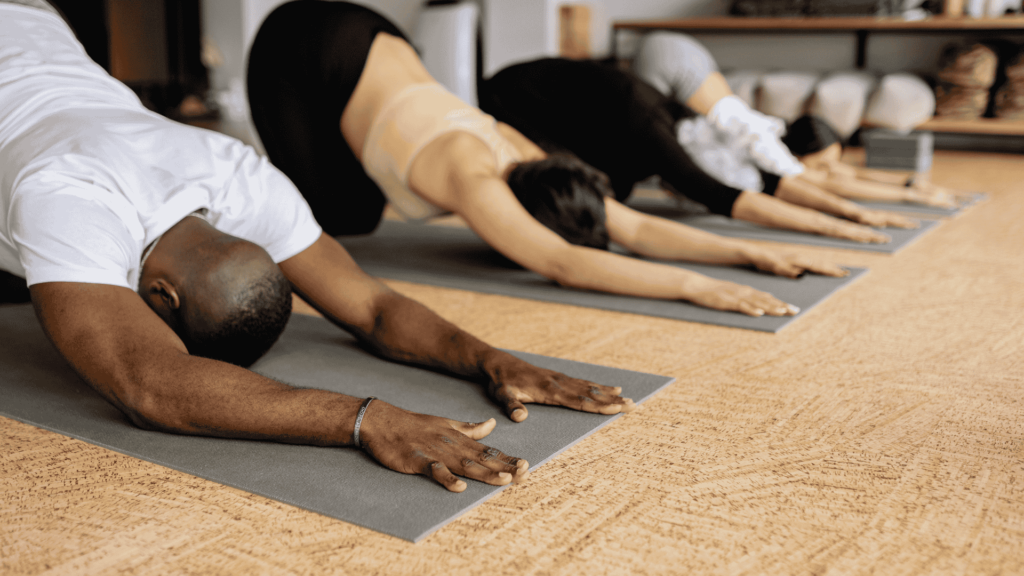
- Child’s Pose (Balasana): Gently lengthens the back while encouraging relaxation and releasing accumulated tension.
- Bridge Pose (Setu Bandhasana): Strengthens the hips and core while supporting healthy spinal alignment.
- Supine Spinal Twist: Promotes gentle movement through the spine and helps ease tightness after long periods of sitting.
- Knees-to-Chest Pose (Apanasana): Encourages the lower back to relax while providing a gentle stretch through the hips and lumbar region.
- Cobra Pose: Encourages gentle spinal extension while helping strengthen the back and improve posture.
These movements should always feel comfortable and pain-free.
If you experience ongoing, severe, or worsening back pain, or if symptoms include numbness, weakness, or pain that radiates down the legs, seek guidance from a qualified healthcare professional before beginning any new exercise programme.
Breathing: The Often-Overlooked Part of Back Care
Breathing influences the way your body moves more than many people realise.
When stress builds, breathing often becomes quicker and shallower. As this happens, muscles throughout the neck, shoulders, and back may remain slightly tense, even while you are resting.
Deep, relaxed breathing encourages the opposite.
It can help:
- reduce unnecessary muscle tension
- improve body awareness
- encourage smoother movement
- support relaxation during stretching and exercise
Simple diaphragmatic breathing complements yoga for back pain by helping the body relax before movement begins. As the breath slows, many people find it easier to move without unnecessary effort and become more aware of areas holding tension.
Sometimes the most effective way to ease movement is not by stretching harder, but by breathing more naturally.
Healthy Habits Beyond the Yoga Mat
The way you care for your back between yoga sessions is just as important as the practice itself. Small choices repeated throughout the day often have the greatest influence on how your body feels over time. Gentle movement, good posture, restorative sleep, and moments of relaxation all work together to support long-term spinal health.
Supportive habits include:
- taking regular movement breaks if you sit for long periods
- maintaining comfortable posture while working
- strengthening the core gradually over time
- walking regularly throughout the week
- sleeping in positions that support spinal alignment
- managing everyday stress through relaxation practices
These habits work together to reduce unnecessary strain while encouraging healthier movement throughout daily life.
Rather than relying on one solution alone, yoga for back pain becomes part of a balanced lifestyle that supports long-term mobility and resilience.
What People Often Notice with a Regular Practice
Everyone’s experience is unique, but many people notice gradual improvements when they practise yoga consistently alongside healthy daily habits.
Over time, you may find yourself feeling less stiff when you wake up, moving more freely throughout the day, and becoming more aware of your posture. Many people also describe feeling more confident in their movements, experiencing less muscle tension after long periods of sitting, and developing a stronger connection with their body.
These changes rarely happen overnight. Instead, they develop gradually through regular movement, greater body awareness, and learning to move with more ease rather than more effort.
A Healthier Back Begins With Gentle Movement
The way you care for your back between yoga sessions is just as important as the practice itself. Small choices repeated throughout the day often have the greatest influence on how your body feels over time. Gentle movement, good posture, restorative sleep, and moments of relaxation all work together to support long-term spinal health. Caring for it is not only about easing discomfort. It is about helping your body move with more confidence, strength, and freedom.
Often, meaningful change begins with the smallest of steps. A deeper breath. A mindful stretch. A little more awareness in the way you move each day.
At The Beach House Goa, the Yoga Retreat offers a calm and holistic space to reconnect with your body through guided yoga, mindful movement, breathwork, and meditation. In the peaceful surroundings of nature, guests are encouraged to release tension, improve posture, and move with greater ease.
Because a stronger back is not built through force. It is built through patience, consistency, and learning to move with care.
Disclaimer: Our content is not intended to provide medical advice or diagnosis of individual problems or circumstances, nor should it be implied that we are a substitute for professional medical advice. Users /readers are always advised to consult their Healthcare Professional prior to starting any new remedy, therapy or treatment. The Beach House – Goa accepts no liability in the event you, a user of our website and a reader of this article, suffers a loss in any way as a result of reliance upon or inappropriate application of the information hosted on our website.